
Warehouse Signage: A Key to Safety, Security, and Efficiency

In the fast-paced world of warehouse and logistics operations, safety is not just a regulatory requirement—it’s a strategic imperative. Among the many tools used to maintain a safe and efficient working environment, signage plays a vital role. Safety signs, gate signs, and parking signs are more than just visual cues; they are essential components of a comprehensive risk management strategy that protects workers, visitors, and assets.
Why Signage Matters in Warehousing and Logistics
Warehouses are dynamic environments where heavy machinery, high volumes of goods, and constant movement converge. In such settings, clear and effective signage helps prevent accidents, guide behaviour, and ensure compliance with workplace health and safety (WHS) regulations.
According to the Work Health and Safety Act 2011, employers are legally obligated to provide a safe working environment. This includes implementing control measures such as signage to alert workers and visitors to potential hazards.
Safety Signs: Preventing Hazards and Promoting Awareness
Safety signs are designed to communicate critical information about risks and required precautions. These include:
Warning signs (e.g., “Forklift Operating Area”)
Mandatory signs (e.g., “High-Visibility Clothing Must Be Worn”)
Prohibition signs (e.g., “No Entry”)
Emergency information signs (e.g., “First Aid Station”)

These signs serve as constant reminders of safe practices and help reduce the likelihood of incidents. As highlighted by SafeWork NSW, signage is a key part of the hierarchy of controls used to manage workplace hazards. When elimination or substitution of a hazard isn’t possible, signage becomes a critical tool for risk mitigation.
Moreover, safety signs contribute to a culture of safety. Workers are more likely to follow procedures and use personal protective equipment (PPE) when visual cues reinforce expectations. This not only protects individuals but also improves operational efficiency by reducing downtime due to accidents.
Gate Signs: Controlling Access and Enhancing Security
Gate signs are often overlooked but are essential for controlling access to warehouse facilities. These signs typically include:
Entry/exit instructions
Visitor check-in procedures
Security warnings
Operating hours
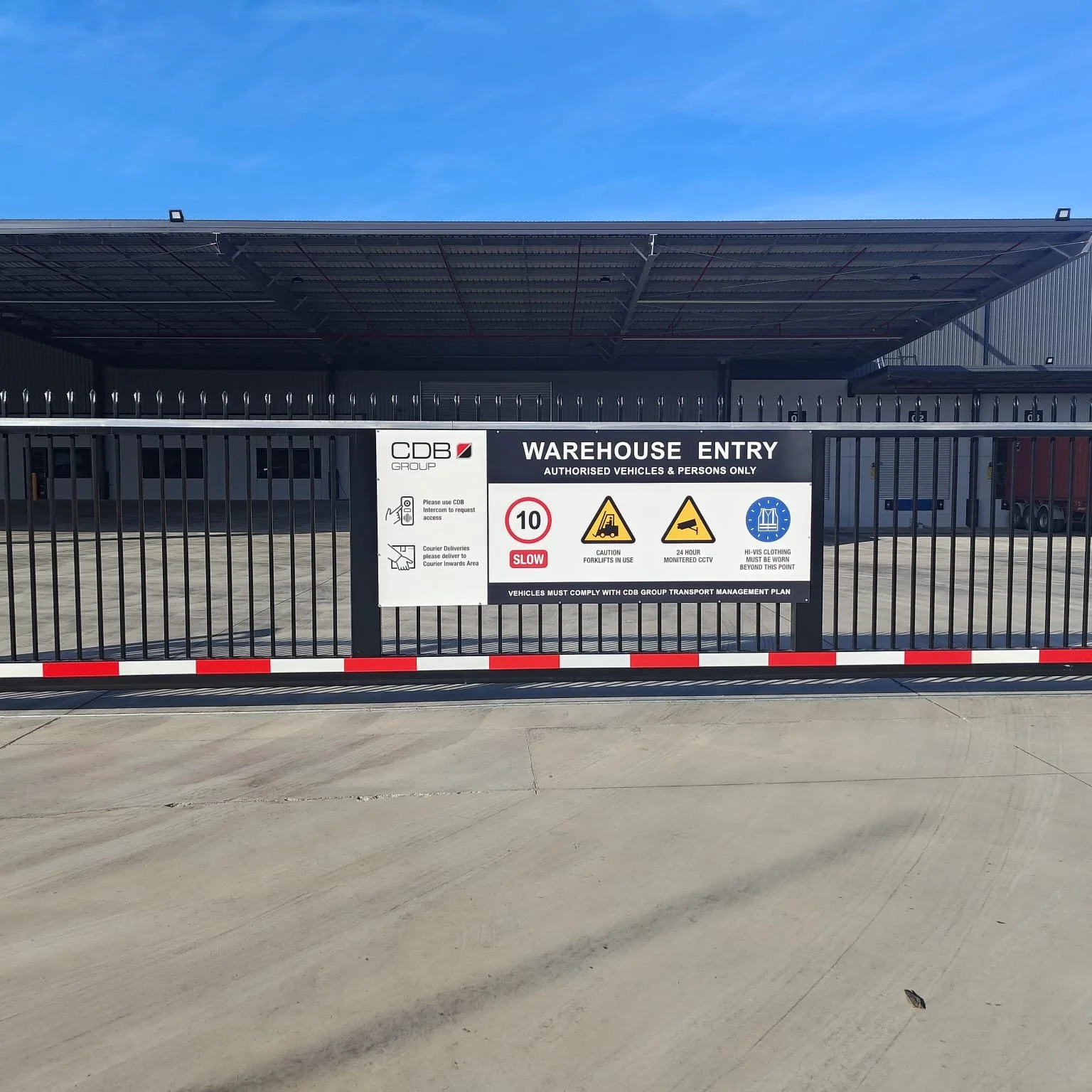
In logistics operations, where goods are constantly moving in and out, gate signs help manage traffic flow and ensure that only authorised personnel enter restricted areas. This is particularly important for facilities handling hazardous materials, where unauthorised access can lead to serious safety breaches.
Gate signage also supports emergency response protocols. In the event of an incident, clear signage can guide emergency services to the correct entry points and provide information about site hazards, such as chemical storage areas. SafeWork NSW emphasises the importance of placarding hazardous chemical storage areas to alert emergency responders and prevent escalation during incidents.

Parking Signs: Streamlining Movement and Reducing Risk
Parking signs play a crucial role in managing vehicle movement within and around warehouse facilities. These signs help:
Designate parking zones for staff, visitors, and delivery vehicles
Prevent congestion and unauthorised parking
Ensure clear access for emergency vehicles
Reduce the risk of collisions and pedestrian accidents
In logistics hubs, where trucks, forklifts, and passenger vehicles share space, clear parking signage is essential for maintaining order and safety. Poorly managed parking areas can lead to delays, damage to goods, and increased risk of injury.
Research from the Institute of Transport and Logistics Studies at the University of Sydney highlights the importance of infrastructure planning in logistics operations. Effective signage is a key component of this planning, helping to optimise traffic flow and reduce operational bottlenecks.
Legal and Regulatory Considerations
Australian WHS regulations require employers to identify hazards and implement control measures. Signage is recognised as a practical and cost-effective method of hazard communication. The Codes of Practice published by various state agencies, including SafeWork SA, provide guidance on the use of signage to meet compliance standards.
Failure to install appropriate signage can result in penalties, legal liability, and reputational damage. More importantly, it can lead to preventable injuries or fatalities. By investing in proper signage, businesses demonstrate their commitment to safety and due diligence.
Best Practices for Signage Implementation
To maximise the effectiveness of signage in warehouse and logistics operations, consider the following best practices:
Conduct a signage audit to identify gaps and ensure compliance.
Use standardised symbols and colours as per Australian Standards (AS 1319).
Ensure visibility and readability, especially in low-light or high-traffic areas.
Regularly inspect and maintain signs to prevent fading or damage.
Train staff on the meaning and importance of signage as part of induction and ongoing safety programs.
Conclusion
Safety, gate, and parking signs are indispensable tools in the warehouse and logistics sector. They not only help prevent accidents and improve operational flow but also ensure compliance with Australian WHS laws. As logistics operations become more complex, the role of signage in maintaining safety and efficiency will only grow.
Investing in high-quality, well-placed signage is a simple yet powerful way to protect your workforce, safeguard your assets, and uphold your duty of care.
If you are experiencing any of these challenges and need assistance in implementing an effective warehouse identification system, we are here to help.
Our team of experts specialises in optimising warehouse operations and can provide tailored solutions to address your specific needs. Don't hesitate to reach out to us for guidance and support. Together, we can overcome these challenges and unlock the full potential of your warehouse identification system.
Contact us today to take the first step towards a more efficient and productive warehouse environment.